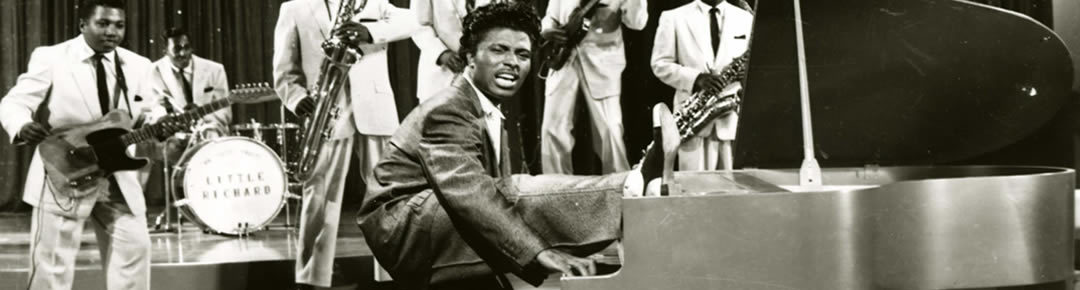
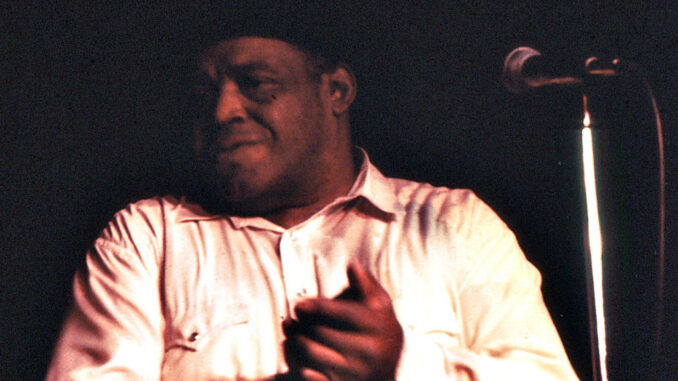
If the post-war Chicago blues had a chief architect, it was Willie Dixon. A towering man with an upright bass, a pocketful of verses and a conviction that the blues should tell the plain facts of life, Dixon wrote, arranged, produced and played on a remarkable share of the records that came out of Chess Records in the 1950s and early 1960s. Muddy Waters, Howlin' Wolf, Little Walter and Koko Taylor turned his songs into hits, and a few years later the Rolling Stones, Cream, Led Zeppelin and the Doors carried those same songs to rock audiences around the world. By his own count he wrote or co-wrote more than 500 songs, and few writers in any genre have been recorded so often by so many.
Vicksburg Roots and a Detour Through the Ring
William James Dixon was born on July 1, 1915, in Vicksburg, Mississippi, one of fourteen children. His mother, Daisy, had a habit of speaking in rhyme, and her son picked it up early, filling notebooks with poems that he would later reshape into lyrics. He sang in church as a small child, fell for the barrelhouse piano of Little Brother Montgomery, and as a teenager got a harsh first-hand education in the blues while serving time on Mississippi prison farms. Back home, a local carpenter named Theo Phelps taught him to sing harmony and put him in the bass slot of his gospel quintet, the Union Jubilee Singers, who were heard on Vicksburg radio station WQBC.
Dixon headed north to Chicago in 1936. At about six-foot-three and well over 250 pounds, he first made his name with his fists, winning the Illinois Golden Gloves novice heavyweight title in 1937. He turned professional and briefly worked as a sparring partner for Joe Louis, but walked away after only four fights following a dispute with his manager over money. The boxing gym did give him one lasting gift: it was there that he met guitarist and pianist Leonard Caston, who talked him into taking music seriously and built him a crude first bass out of a tin can and a single string.
The Five Breezes and the Big Three Trio
In 1939, Dixon and Caston were founding members of the Five Breezes, a vocal group that blended blues and jazz with the smooth harmonies made popular by the Ink Spots. World War II cut that run short. Dixon refused induction as a conscientious objector, unwilling to fight for a country whose laws kept Black Americans down, and he spent about ten months imprisoned for it. After the war he fronted the Four Jumps of Jive before reuniting with Caston in the Big Three Trio, a polished, harmony-rich jump blues act that worked from 1946 to 1952 and recorded for Columbia. The trio's tight vocal arrangements gave Dixon a sense of song structure that he would soon bring to a rougher, louder style of blues.
The Chess Years
Dixon began recording for Chess in the late 1940s, and by 1951 he was a full-time member of the staff at the label run by brothers Leonard and Phil Chess, serving as session bassist, talent scout, arranger, producer and in-house songwriter. (We covered the rise of Chess and the Chicago sound in our History of the Blues, Part 2.) His breakthrough as a writer came with "Hoochie Coochie Man", which Muddy Waters recorded on January 7, 1954. Built on a stop-time riff and a swaggering, hoodoo-flavored boast, it became one of Muddy's signature songs, cemented Dixon's role as the label's go-to writer, and was later preserved in the Library of Congress's National Recording Registry. Muddy followed it the same year with two more Dixon songs, "I Just Want to Make Love to You", which reached number four on the R&B chart, and "I'm Ready".
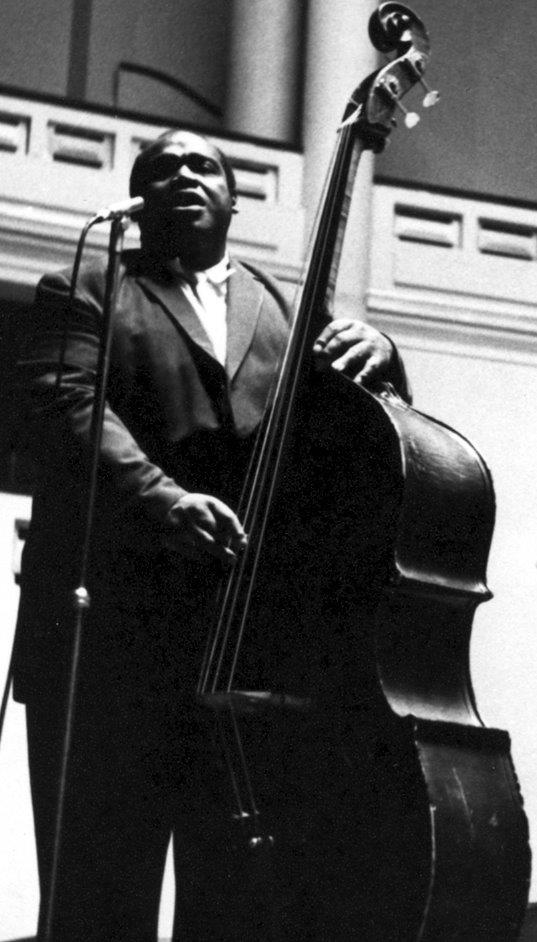
Dixon wrote with specific voices in mind, and nobody suited his darker material better than Howlin' Wolf. After "Evil" in 1954, the pair hit a remarkable stretch in 1960 and 1961 with "Spoonful", "Back Door Man", "Wang Dang Doodle", "The Red Rooster" and "I Ain't Superstitious". For harmonica ace Little Walter, Dixon supplied the jaunty "Mellow Down Easy" in 1954 and then "My Babe", a secular rewrite of the gospel number "This Train" that Sister Rosetta Tharpe had recorded. Released in early 1955, "My Babe" became the only Dixon composition to reach number one on the R&B chart.
Dixon's bass also anchored the birth of rock and roll at Chess. He played on Chuck Berry's 1955 debut single "Maybellene", and he worked closely with Bo Diddley, playing on sessions and writing "You Can't Judge a Book by the Cover" (1962), with a writing credit on Bo's 1955 single "Pretty Thing" as well. Berry never forgot the debt; Dixon's Rock & Roll Hall of Fame page quotes him saying that Dixon "made me what I am, so far as the basics of my music." Other Dixon songs from this era include "The Seventh Son" for Willie Mabon (1955) and "Bring It On Home", which Sonny Boy Williamson II recorded in 1963. In the mid-1960s, Dixon brought singer Koko Taylor to Chess's Checker subsidiary and had her cut "Wang Dang Doodle" in 1965. Her roaring version became a hit in 1966, gave her a career-long signature song, and was added to the National Recording Registry in 2023.
The Cobra Interlude
Dixon's relationship with Chess was often strained, mostly over money. From around 1956 to early 1959 he took his talents to Cobra Records, a small West Side label run by Eli Toscano, where he served as scout, producer, arranger, songwriter and bassist. The results helped define the stinging, minor-key "West Side sound." Dixon produced Otis Rush's first recording, "I Can't Quit You Baby", which was also Cobra's debut single and a hit in 1956, and he oversaw the first releases by Magic Sam and Buddy Guy on Cobra and its Artistic imprint. When Cobra folded in 1959, Dixon returned to Chess.
Taking the Blues to Europe and the British Blues Boom
In 1962, German promoters Horst Lippmann and Fritz Rau launched the American Folk Blues Festival, a touring package designed to bring authentic blues performers to European audiences, and they turned to Dixon to help them reach the Chicago scene. Dixon toured with the festival in its early years as a performer and bassist alongside the likes of Memphis Slim, T-Bone Walker and John Lee Hooker, and he stayed involved behind the scenes for years afterward. The tours drew enthusiastic young audiences and heavy press attention. Many of those fans were aspiring musicians, and Dixon was glad to pass his songs along.
The payoff came quickly. The Rolling Stones covered "I Just Want to Make Love to You" on their 1964 debut album and then took "Little Red Rooster" to number one on the UK singles chart in December 1964, a rare feat for a straight blues record. Cream made "Spoonful" a centerpiece of their 1966 debut Fresh Cream, and the Jeff Beck Group cut both "You Shook Me" and "I Ain't Superstitious" for 1968's Truth. Led Zeppelin opened their career with Dixon too, recording "You Shook Me" and "I Can't Quit You Baby" for their 1969 debut. In America, the Doors put "Back Door Man" on their 1967 self-titled debut, and Chicago's own Paul Butterfield Blues Band revived "Mellow Down Easy" on their 1965 debut.
Fighting for the Songs: Copyrights and Blues Heaven
All those covers should have made Dixon wealthy, but like many blues writers of his generation he saw only a small share of the money his songs earned. In 1977, he and Muddy Waters sued Arc Music, the Chess-affiliated publisher, over unpaid royalties, and Dixon went on to run his own publishing company, Hoochie Coochie Music. He also went after uncredited borrowing. Led Zeppelin's 1969 smash "Whole Lotta Love" lifted lyrics from "You Need Love", a Dixon song Muddy Waters had recorded in 1962, and the band's "Bring It On Home" drew on his song of the same name. Dixon filed suit in 1985, and the case was settled out of court in 1987, with Dixon credited as a co-writer on later releases.
In 1981, Dixon founded the Blues Heaven Foundation to help aging blues musicians, support blues education, and help artists recover the copyrights and royalties they had lost. After his death, his widow Marie and the Dixon family fulfilled one of his dreams in 1997 by buying the former Chess Records studio at 2120 South Michigan Avenue in Chicago, which still houses Blues Heaven today.
Later Years and Legacy
Through the late 1960s and 1970s Dixon led the Chicago Blues All-Stars on tours of the United States and Europe, and in 1970 he revisited many of his best-known songs under his own name on the Columbia album I Am the Blues. Diabetes took a heavy toll on his health in later years and eventually cost him a leg, but he kept working. His 1988 album Hidden Charms, produced by T Bone Burnett for Bug/Capitol, won the Grammy for Best Traditional Blues Recording in 1989, the same year he published his autobiography, also titled I Am the Blues, written with Don Snowden.
Willie Dixon died of heart failure on January 29, 1992, in Burbank, California, at the age of 76, and was buried at Burr Oak Cemetery in Alsip, Illinois. The honors had started arriving while he was alive, with induction into the Blues Foundation's Blues Hall of Fame in its first class in 1980. The Rock & Roll Hall of Fame followed in 1994 as an early influence, then a Mississippi Blues Trail marker in Vicksburg in 2007, and the Songwriters Hall of Fame in 2015. Cedric the Entertainer played him in the 2008 Chess Records film Cadillac Records. Yet the truest monument is the songbook itself. From the Delta roots of "Spoonful", which echoes Charley Patton's 1929 "A Spoonful Blues", to the arena-rock thunder of Led Zeppelin, Dixon's songs form one of the sturdiest bridges between the blues and everything that grew out of it.
Key Willie Dixon Songs
- "Hoochie Coochie Man" - Muddy Waters (1954)
- "I Just Want to Make Love to You" - Muddy Waters (1954)
- "Evil" ("Evil Is Goin' On") - Howlin' Wolf (1954)
- "I'm Ready" - Muddy Waters (1954)
- "Mellow Down Easy" - Little Walter (1954)
- "My Babe" - Little Walter (1955)
- "The Seventh Son" - Willie Mabon (1955)
- "Pretty Thing" - Bo Diddley (1955)
- "I Can't Quit You Baby" - Otis Rush (1956)
- "Spoonful" - Howlin' Wolf (1960)
- "Back Door Man" - Howlin' Wolf (1961)
- "Wang Dang Doodle" - Howlin' Wolf (1961) (Koko Taylor's hit version, 1966)
- "The Red Rooster" ("Little Red Rooster") - Howlin' Wolf (1961)
- "I Ain't Superstitious" - Howlin' Wolf (1962)
- "You Need Love" - Muddy Waters (1962)
- "You Shook Me" (with J.B. Lenoir) - Muddy Waters (1962)
- "You Can't Judge a Book by the Cover" - Bo Diddley (1962)
- "Bring It On Home" - Sonny Boy Williamson II, recorded 1963
Further reading: Geoffrey Himes, "Forgotten Giants: Willie Dixon - The Poet Laureate of Chess Records", Paste, September 25, 2018; and Dixon's autobiography, I Am the Blues (with Don Snowden).
~